
admin

Best website designer in Nigeria

Best Website Designer in Nigeria

Have you ever visited a website and immediately felt confident about a brand? Or maybe you clicked away from one within seconds because it looked outdated? That right there is the power of a great Website Designer. ALSO READ: Top Web Design Agencies in Abuja In Nigeria today, businesses are moving online faster than ever. From small startups in Lagos to established brands in Abuja and Port Harcourt, everyone wants visibility. But here’s the truth: having a website is not enough. You need the best Website Designer who understands your business, your audience, and the Nigerian digital landscape. Think of your website as your digital office. If your physical office looks messy and unprofessional, clients may not take you seriously. The same applies online. A skilled Website Designer ensures your online presence speaks confidence, trust, and professionalism. Let’s dive deep into what makes the best website designer in Nigeria and how you can choose the right one. 1. Why Every Nigerian Business Needs a Website Designer The Nigerian market is competitive. Whether you run a fashion brand, real estate company, school, or digital agency, people search online before making decisions. A professional Website Designer helps you: Build credibility Reach more customers Showcase your services clearly Increase sales Imagine losing customers simply because your competitor’s website looks better. Painful, right? 2. Who is a Website Designer? A Website Designer is a professional who creates the look, layout, and overall feel of a website. They combine creativity with technical skills to ensure your site is both beautiful and functional. But it’s not just about colors and images. A good Website Designer thinks about: User experience Mobile responsiveness Speed Navigation Conversion optimization In simple terms, they make sure visitors don’t just visit — they stay and take action. 3. Qualities of the Best Website Designer in Nigeria Not all designers are equal. So what separates the best from the rest? Strong Portfolio A top Website Designer should have real projects to show. You want proof, not promises. Understanding of Nigerian Market Nigeria has unique buying behaviors. A designer who understands local trends, payment systems, and consumer preferences has an edge. Creativity with Strategy Design without strategy is like a car without fuel. The best designers combine visuals with business goals. Good Communication Skills You don’t want someone who disappears after payment. Clear communication is key. 4. Skills That Set Top Website Designers Apart The best Website Designer in Nigeria typically has: Knowledge of WordPress, Shopify, or custom coding UI/UX design expertise SEO understanding Graphic design skills Speed optimization skills They don’t just design; they build systems that work smoothly. 5. Types of Websites You Can Build A professional Website Designer can create: Business Websites Perfect for companies that want an online presence. E-commerce Websites For selling products online with payment integration. Portfolio Websites Ideal for creatives like photographers and designers. Blog Websites Great for content creators and personal brands. Corporate Websites Advanced platforms for large organizations. Each type requires a different strategy. That’s why experience matters. 6. How Much Does a Website Designer Charge in Nigeria? This is one of the most common questions. Website design costs in Nigeria vary depending on complexity. On average: Basic website: ₦150,000 – ₦400,000 Business website: ₦400,000 – ₦800,000 E-commerce website: ₦800,000 – ₦2,000,000+ Prices depend on features, functionality, and customization. Be careful of extremely cheap offers. Remember, you get what you pay for. 7. Benefits of Hiring a Professional Website Designer Why not just hire a student or use a free template? Because a professional Website Designer offers: Custom design tailored to your brand Mobile-friendly layout Fast loading speed Secure website structure Ongoing support It’s an investment, not an expense. 8. Website Designer vs DIY Website Builders You might think: “Why not use Wix or Squarespace?” DIY platforms are fine for small personal projects. But for serious businesses, they often limit customization and scalability. A professional Website Designer gives you: Full control Better branding Advanced features Professional look It’s like building a house. Would you rather use a prefab shed or hire an architect? 9. How to Choose the Right Website Designer Here’s a simple checklist: Check Reviews and Testimonials What are past clients saying? Ask About Process How do they handle projects? Discuss SEO Do they optimize your site for Google? Evaluate Communication Are they responsive? Compare Value, Not Just Price Cheap doesn’t always mean smart. Take your time. This decision affects your brand. 10. Mistakes to Avoid When Hiring a Website Designer Avoid these common errors: Choosing based on price alone Ignoring contract details Not asking about maintenance Failing to check portfolio Don’t rush. Your website is your digital identity. 11. The Role of SEO in Website Design A beautiful site is useless if no one sees it. That’s where SEO comes in. A skilled Website Designer ensures: Proper keyword structure Fast loading speed Mobile responsiveness Clean URL structure Optimized images SEO and design go hand in hand. 12. Future of Website Design in Nigeria Nigeria’s digital space is growing rapidly. We are seeing: More mobile-first designs AI integration Faster hosting solutions Interactive websites Businesses that invest in quality Website Designers now will stay ahead. 13. Final Thoughts Finding the best Website Designer in Nigeria is not about picking the cheapest option. It’s about choosing someone who understands your vision and can translate it into a powerful online presence. Your website is more than a digital page. It’s your brand’s voice, your 24/7 salesperson, and your first impression. So ask yourself: is your current website working for you, or against you? Invest wisely. Choose smartly. And let your business shine online. FAQs 1. How do I know if a Website Designer is experienced? Check their portfolio, reviews, and past client projects. Experience shows in quality and consistency. 2. How long does it take a Website Designer to build a website? Typically 2–6 weeks, depending on complexity and content availability. 3. Can a Website Designer help with SEO? Yes, many professional designers integrate SEO

Best Website Designer in Nigeria Read More »

Work of Search Engine Optimization

What Is the Work of Search Engine Optimization (SEO)?

The Work of Search Engine Optimization (SEO)! Search Engine Optimization, often called SEO, is the work people do to help websites show up on search engines like Google, Bing, and Yahoo. When someone searches for information online, search engines try to show the best and most helpful pages first. Therefore, SEO helps websites appear higher on the search results page. In simple words, SEO helps people find a website easily. Without SEO, a website may stay hidden, even if it has good content. Because of this, SEO plays a very important role on the internet today. Why Is SEO Important? SEO is important because most people click on the first few results they see on Google. So, if a website appears on the first page, more people will visit it. As a result, the website can grow faster. Also, SEO helps search engines understand what a website is about. When search engines understand a page better, they can show it to the right people. Therefore, SEO helps both website owners and users. ALSO READ: Best SEO Tools for Keyword Research and Optimization How Do Search Engines Work? Before understanding the work of SEO, it is good to know how search engines work. First, search engines scan websites. This process is called crawling.Next, they store information about those websites. This step is called indexing.Finally, they show results when someone searches for something. SEO helps at every step. So, SEO makes it easier for search engines to crawl, index, and rank a website. Main Work of Search Engine Optimization 1. Keyword Research Keywords are the words people type into search engines. For example, someone may type “best shoes for kids.” SEO experts research these words carefully. Then, they choose keywords that people search for often. After that, they use these keywords in website content. Therefore, the website can appear when people search for those words. 2. Creating Helpful Content Content means text, images, and videos on a website. SEO focuses on creating useful and clear content. Good SEO content: Answers questions Uses simple language Helps readers learn something new Because search engines love helpful content, they rank such pages higher. Also, readers stay longer on helpful pages, which helps SEO even more. 3. On-Page SEO Work On-page SEO means improving things inside the website. This includes: Using keywords in titles and headings Writing short and clear paragraphs Adding images with clear names Creating easy-to-read URLs As a result, both users and search engines enjoy the page. 4. Technical SEO Work Technical SEO helps the website work better. For example: Pages should load fast The site should work well on mobile phones Links should not be broken When a website works smoothly, users feel happy. Therefore, search engines reward it with better rankings. 5. Off-Page SEO Work Off-page SEO happens outside the website. The main work here is building links. When other websites link to your website, search engines see it as a sign of trust. So, your website looks more reliable. However, quality links matter more than quantity. Because of this, SEO experts focus on trusted websites. How SEO Helps Businesses and People SEO helps businesses reach more customers online. For example, a small shop can appear on Google when someone searches nearby. As a result, more people can visit the shop. Also, SEO helps students, teachers, and parents find learning materials easily. Therefore, SEO supports education as well. SEO Is a Long-Term Process SEO does not give results in one day. Instead, it takes time and patience. However, the results last longer. When a website ranks well, it can get free traffic every day. So, SEO saves money in the long run compared to paid ads. Common SEO Mistakes to Avoid Some people try to cheat search engines. However, this can harm a website. Common mistakes include: Using too many keywords Copying content from other websites Using fake links Instead, SEO should stay honest and helpful. That way, the website can grow safely. The Future of Search Engine Optimization SEO keeps changing because search engines keep improving. Today, search engines focus more on user experience. So, websites must stay simple, fast, and useful. Also, voice search and mobile search are growing. Therefore, SEO experts now think about how people speak, not just how they type. Conclusion Search Engine Optimization is the work of helping websites appear better on search engines. It includes keyword research, content creation, technical improvements, and link building. Most importantly, SEO helps people find useful information easily. At the same time, it helps websites grow naturally. In conclusion, SEO is not hard to understand. When done the right way, it supports learning, business, and communication for everyone.

What Is the Work of Search Engine Optimization (SEO)? Read More »

Abuja SEO Experts

10 Abuja SEO Experts Compared: Who Really Delivers Results?

Abuja SEO Experts Compared – If you want your website to rank higher in search engines, choosing the right SEO expert is crucial. Abuja has a growing pool of professionals, but results vary widely. Here’s an in-depth look at the top 10 SEO experts in Abuja and their proven track records. 1. PluxMedia Network PluxMedia specializes in technical SEO and website audits. They optimize both local and international search visibility. Transitioning clients often see a 40% traffic boost within six months. Their approach combines content strategy with link-building. 2. SolTech SEO Solutions SolTech focuses on small to medium businesses. They excel in on-page optimization and keyword strategy. Clients report improved organic traffic within three months. Their SEO audits are detailed and actionable. 3. WebRise Digital WebRise emphasizes content marketing alongside SEO. Their blog optimization strategies help clients rank for competitive keywords. They offer transparent monthly reports. Businesses experience better conversion rates and user engagement. 4. Abuja Rank Masters Abuja Rank Masters delivers strong local SEO results. They optimize Google My Business listings and local citations. Clients see noticeable increases in local search visibility. Their customer support is responsive and effective. 5. OptiMax SEO OptiMax focuses on long-term SEO strategies. They implement white-hat link-building techniques and website speed optimization. Brands report sustainable growth in rankings and traffic. OptiMax prioritizes measurable outcomes. 6. NextGen SEO Agency NextGen excels in both SEO and digital marketing integration. They optimize PPC campaigns alongside organic search. Their strategies target conversions, not just traffic. Businesses experience increased ROI within months. 7. AlphaRank Solutions AlphaRank specializes in e-commerce SEO. They optimize product pages, category pages, and structured data. Online stores see faster indexing and higher product visibility. Their SEO audits are actionable and precise. 8. BlueWave Digital BlueWave focuses on technical SEO and website health. They fix crawl errors, improve site speed, and enhance mobile usability. Their clients experience higher search rankings and reduced bounce rates. They are highly data-driven. 9. SEO360 Abuja SEO360 emphasizes competitive analysis and keyword targeting. They help businesses outrank competitors in search engines. Their content strategies are research-based and effective. Clients see measurable improvements in organic traffic. 10. RankBoost Nigeria RankBoost delivers a mix of on-page, off-page, and technical SEO. They provide comprehensive reports and actionable insights. Brands notice higher search rankings and improved online visibility. Their client retention rate is impressive. How to Choose the Right SEO Expert in Abuja Check Proven Results: Look for case studies and client testimonials. Assess Communication: Regular updates are crucial for effective SEO. Review Services: Ensure they offer a full range of SEO strategies. Consider Your Budget: Cost should match expected outcomes. Look for Transparency: Experts should provide detailed reporting. Conclusion Abuja offers many skilled SEO professionals, but results vary. Focus on experts with proven performance, transparent reporting, and client success stories. Choosing the right SEO expert can transform your online presence and drive real business growth.

10 Abuja SEO Experts Compared: Who Really Delivers Results? Read More »

Social Media Sales Hacks

10 Social Media Sales Hacks Nobody Tells You About—But Explode Your Product Sales Overnight

10 Social Media Sales Hacks – In the fast-paced digital world, social media has become the ultimate sales machine—but only for those who know how to use it the right way. While thousands of businesses struggle to convert followers into buyers, a small number of brands quietly dominate the market with simple yet powerful sales techniques. Today, you’re going to discover 10 proven social media sales hacks that most marketers never talk about—yet these are the exact strategies that can skyrocket your product sales overnight. These hacks work whether you’re selling physical products, digital services, coaching programs, or anything in between. Prepare to take notes… because once you implement these tactics, your competitors won’t understand what hit them. 1. Use the “Micro-Influencer Chain Effect” for Instant Credibility Most brands chase big influencers with millions of followers—but here’s the truth:Micro-influencers (3K–25K followers) convert 300% better. Why?Because their audiences trust them, interact with them daily, and see them as friends rather than celebrities. The chain effect happens when you collaborate with multiple micro-influencers within the same niche at once. Suddenly your brand is everywhere. Their audiences start to believe: “If all these creators I trust are recommending this product, it must be good.” This leads to: Faster brand trust Higher conversion rates Lower cost per acquisition Rapid sales bursts within hours Pro Tip:Create a simple affiliate program with generous commissions to attract more micro-influencers fast. 2. Create Irresistible 24-Hour “Flash Sale Loops” Flash sales work—but flash sale loops work even better. Instead of doing one occasional sale, run rotating 24-hour offers across platforms such as Instagram Stories, TikTok Posts, or Facebook Groups. These micro-sales create urgency, and urgency creates impulse purchases. Examples: 24-hour discount 24-hour free shipping 24-hour bonus gift 24-hour bundle deals People love exclusive, fleeting offers. They don’t want to miss out—so they buy instantly. 3. Use the “Comment to Buy” Conversion Trick This tactic is wildly underused yet insanely powerful. Instead of telling people to “DM to order” or “visit the website,” use: “Comment ‘YES’ to get the link instantly.” Why it works: More comments boost algorithm visibility People hate leaving the app to buy Instant DMs feel like personalized selling Works perfectly with automation tools This hack can generate explosive engagement and sales within minutes. Also: Social Media Marketing For Sales 4. Sell Through Storytelling, Not Product Features Most brands shove product features in people’s faces. High-converting brands, however, use relatable storytelling. Instead of saying:“Buy our waterproof watch.” Say:“Ever washed your hands, forgot to remove your watch—and panicked? Not anymore.” The brain connects to stories 22× faster than facts. Use storytelling in: Captions Reels/TikToks Carousel posts Live streams Ads Email marketing When people see themselves in the story, they buy immediately. 5. Use “10-Second Selling,” the Shortest High-Conversion Strategy Ever Modern attention spans are tiny. Your content should sell within the first 10 seconds—before people scroll away. Use this structure: Hook (problem or curiosity) Emotional trigger Value (explain the solution fast) Call to action Example:“Stop scrolling! If you’ve been struggling with acne for years, this 3-step routine will change your skin forever…” This instantly grabs attention and pushes people into your sales funnel. 6. Add a “Proof Wall” That Does the Selling for You Forget long sales pages.Forget begging people to trust your brand. A proof wall is a collection of: Testimonials Video reviews Screenshots of happy customers Before/after photos Verified purchases Influencer mentions Media features Put it in your highlights, pinned posts, website, and product pages. Customers won’t ask,“Is this legit?”They’ll think,“So many people are buying—let me get mine before it sells out.” 7. Use AI-Powered Response Automation to Close Sales Faster Most small businesses lose sales because they respond too slowly to inquiries. Using automation tools like ManyChat, Botpress, IG Automation tools, or WhatsApp sequences boosts conversions by up to 87%, because people get instant replies. Automate messages for: Product inquiry Delivery details Pricing FAQs Discounts Follow-up People buy when responses are fast.Automation makes that possible 24/7. 8. Create “High-Value Content Clusters” Around Your Product Instead of random posting, create themed content clusters around your product: For instance, if you sell skincare: “Skincare mistakes ruining your skin” “Morning routines for glowing skin” “Ingredients you must avoid” “Before/after results stories” “How to treat acne naturally” These content clusters make you an authority—and people trust authority enough to buy without hesitation. 9. Use the “Pinned Triple Threat” Strategy Every platform lets you pin posts. Use your top three pinned posts strategically: Your best-performing content Your product sales post Your brand story/mission This gives new visitors a complete picture of who you are and what you sell—within seconds. This elevates conversion instantly because people don’t have to “scroll endlessly” to find the important stuff. 10. Master the “Behind-the-Scenes Soft Sell” Technique People LOVE behind-the-scenes content because it feels authentic and intimate. Use BTS content to show: How your products are made Your packing and shipping process Your team Your workspace Your daily routine Customer orders being processed This creates trust, relatability, and emotional connection.And emotional connection = sales. When people feel they “know you,” they buy from you. Bonus Hack: Use FOMO Screenshots to Trigger Instant Action This is one of the most powerful tricks. Take screenshots of: “Are you still available?” “Is this still in stock?” “Do you deliver to Lagos/Accra/Abuja?” “I want 3 pieces.” Post them with a caption:“Stock is almost finished—order now before we close today’s deliveries.” People panic (in a good way)…and buy immediately. Conclusion Social media isn’t just a place to post photos—it’s the world’s most powerful selling machine. But only a few businesses truly understand the psychology behind instant conversions. By implementing these 10 hidden social media sales hacks, you gain the ability to: Increase sales overnight Multiply engagement Build trust effortlessly Become the go-to brand in your niche Sell faster, smarter, and more profitably The beauty of these strategies?They cost almost nothing to implement—but the rewards are massive. Start using them today and watch your product sales explode beyond anything you’ve

10 Social Media Sales Hacks Nobody Tells You About—But Explode Your Product Sales Overnight Read More »

Top Web Design Agencies in Abuja

Top Web Design Agencies in Abuja

Finding the top web design agency in Abuja can be challenging. Many businesses want modern websites that attract customers and boost online presence. Abuja hosts several professional agencies that deliver creative and responsive web design solutions. Below is a comprehensive list of top web design companies in the city. Creative Web Design Agencies in Abuja Abuja’s digital landscape is growing fast. Many agencies now offer beautiful websites tailored to different industries. These companies blend strategy, creativity, and technology to deliver excellent results. 1. Pluxmedia Network Pluxmedia Network is a leading web design and digital marketing agency in Abuja. The team creates responsive, fast, and SEO-friendly websites. They also handle branding, social media marketing, and search engine optimization. Their websites help businesses increase visibility and convert more leads online. 2. CKDigital Abuja CKDigital delivers high-end website solutions for brands across Nigeria. Their agency focuses on user experience and modern design. They also offer eCommerce development, corporate branding, and digital strategy. Many clients choose them for their clean and functional website styles. 3. Digify Pro Services Digify Pro Services provides affordable and professional web design in Abuja. They create custom websites that load fast and perform well. Their agency also offers website maintenance, hosting, and digital marketing services. They are known for their quick delivery and reliable support. 4. Wild Fusion Digital Centre Wild Fusion is a top digital agency with a strong presence in Abuja. They offer advanced web development and digital marketing services. Their team focuses on strategy and innovation. They help businesses build strong online identities through well-crafted websites. 5. Sprinble Technologies Sprinble Technologies builds high-performing websites for startups and established brands. Their team delivers creative and responsive designs. They also offer mobile app development and branding services. Many clients trust them for their attention to detail. 6. Ellae Creative Agency Ellae Creative Agency provides premium brand and website solutions. They design stunning websites with strong visual appeal. The agency also specializes in brand strategy and digital marketing. Their work stands out for its elegant and modern approach. 7. ByteSize Digital Agency ByteSize Digital is known for building scalable websites that support business growth. They offer eCommerce development, landing page design, and performance-driven digital campaigns. Their team focuses on functionality and conversion optimization. 8. Abuja Web Designers Hub This agency offers affordable web design for small and medium businesses. They create responsive websites with clean layouts. Their services include SEO, hosting, and website maintenance. Many start-ups prefer them for their flexible packages. Why Choose a Web Design Agency in Abuja? Working with a professional agency in Abuja offers many benefits. These companies understand local markets and digital trends. They design websites that engage customers and support business goals. A great website boosts credibility and helps brands stand out online. Final Thoughts Abuja is home to many reliable web design agencies. Each company provides unique skills and solutions. Whether you need a simple portfolio website or a full eCommerce platform, you can find the right agency in the city. Choose a team that understands your vision and delivers quality results. If you need a tailored recommendation, feel free to ask!

Top Web Design Agencies in Abuja Read More »

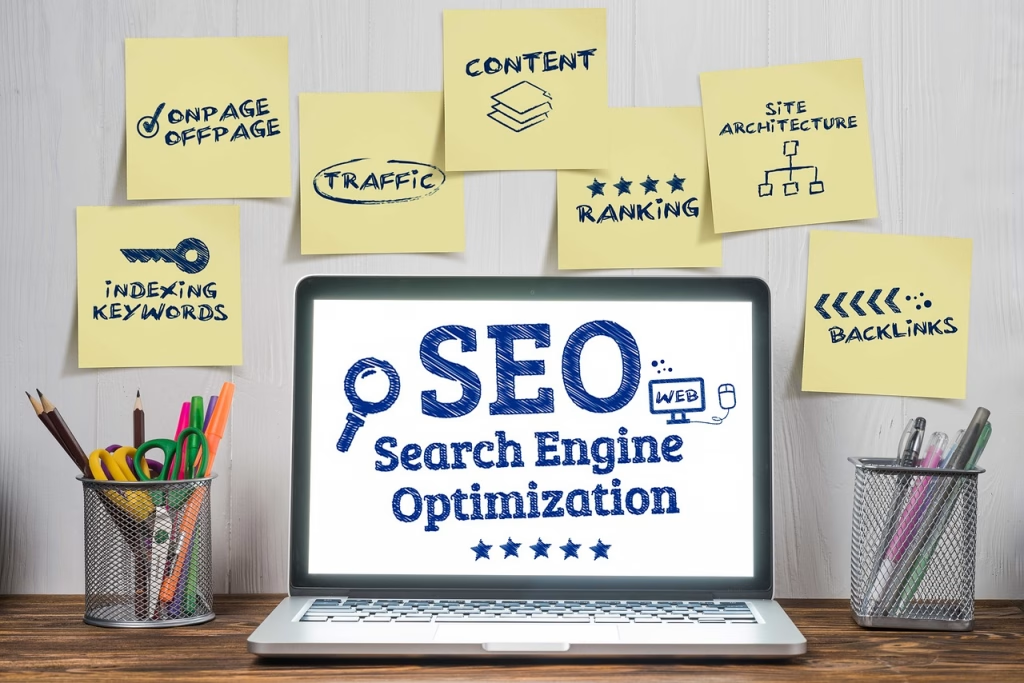
search engine optimization, seo, digital marketing, laptop, online job, seo, seo, seo, seo, seo, digital marketing

What Is Search Engine Optimization and How Does It Work?

Introduction to Search Engine Optimization (SEO) If you’ve ever searched for something on Google and clicked one of the first results, you’ve experienced the power of Search Engine Optimization. But what exactly is Search Engine Optimization, and why does it matter so much for businesses, bloggers, and anyone with a website? Let’s break it down in simple, everyday terms. What Does Search Engine Optimization Stand For? SEO stands for Search Engine Optimization. In plain words, it’s the process of making your website more visible to people who are searching online. Think of it like putting up a bright, attractive sign for your shop in a busy marketplace — SEO makes sure search engines notice your website and show it to the right audience. Why Is Search Engine Optimization (SEO) Important? Have you ever clicked past page two of Google? Probably not. Most people find what they need on the first page. SEO helps you land on that page, increasing traffic, building credibility, and ultimately boosting your sales or influence. How Search Engines Work To understand SEO, you first need to know how search engines like Google function. Crawling Search engines send out bots (also called spiders) to “crawl” the web, discovering new and updated content. Indexing Once crawled, the content is stored in Google’s vast database, called an index, so it can be retrieved later. Ranking When someone searches, Google uses algorithms to decide which pages are most relevant and ranks them accordingly. Key Elements of Search Engine Optimization (SEO) On-Page SEO This refers to everything you control on your website. Title Tags & Meta Descriptions: These act like headlines and short ads for your site in search results. Keyword Optimization: Using the right keywords naturally within your content. Internal Linking: Linking to other pages on your site for better navigation and authority flow. Off-Page SEO This is about building credibility outside your website. Backlinks: Links from other websites pointing to yours. Social Signals: Mentions, shares, and engagement on social media. Technical SEO This ensures your site works smoothly. Site Speed: Faster websites keep users happy. Mobile Optimization: Google ranks mobile-friendly sites higher. Secure HTTPS: A secure website builds trust. Types of Search Engine Optimization (SEO)   White Hat Search Engine Optimization (SEO) Following search engine guidelines honestly — the safest and most sustainable method. Black Hat Search Engine Optimization (SEO) Tricks like keyword stuffing or buying links. They might work short-term but risk penalties. Grey Hat Search Engine Optimization (SEO) A mix of both, often walking a fine line between ethical and risky tactics. How Keywords Work in Search Engine Optimization (SEO) Keywords are the bridge between what people search for and the content you create. Short-Tail Keywords: Broad, high-competition terms like “SEO.” Long-Tail Keywords: Specific phrases like “how does SEO work for small businesses.” Search Intent: Understanding whether the user wants information, products, or services. Content and Search Engine Optimization (SEO) Importance of Quality Content “Content is king.” Google loves valuable, well-written content that solves users’ problems. Content-Length & Value Longer doesn’t always mean better, but detailed content often performs well. User Engagement Signals Bounce rate, time on page, and clicks tell Google how users feel about your content. How Backlinks Affect Search Engine Optimization (SEO) High-Quality vs Low-Quality Backlinks A link from a reputable site (like Forbes) is worth more than dozens from spammy sites. Link-Building Strategies Guest posting, collaborations, and creating share-worthy content are effective tactics. Search Engine Optimization (SEO) Tools and Analytics No SEO effort is complete without tracking progress. Tools like: Google Analytics: Tracks traffic and user behavior. Google Search Console: Shows how your site performs in searches. SEO Plugins: Tools like Yoast or Rank Math help with optimization. Local Search Engine Optimization (SEO) For small businesses, local SEO is a game changer. Google Business Profile: Optimizing your listing helps people find you. Local Citations: Ensuring your name, address, and phone number are consistent online. Reviews and Ratings: Positive reviews boost both trust and rankings. Voice Search and Search Engine Optimization (SEO) With Siri, Alexa, and Google Assistant, voice search is rising fast. Conversational Keywords: People speak searches differently than they type. Example: Instead of typing “best pizza Lagos,” they’ll say, “Where can I get the best pizza near me?” Mobile Search Engine Optimization (SEO) Since most searches happen on phones, mobile SEO is crucial. Responsive Design: Ensures your site looks good on all devices. Mobile Page Speed: Slow sites lose mobile users quickly. Common Search Engine Optimization (SEO) Mistakes to Avoid Keyword Stuffing: Overusing keywords looks unnatural. Ignoring Technical SEO: Broken links and slow sites hurt rankings. Duplicate Content: Copying content confuses search engines. The Future of Search Engine Optimization (SEO) SEO isn’t static. It’s always evolving. AI and Machine Learning: Google uses AI to better understand searches. Search Personalization: Results are becoming more tailored to individuals. Visual and Video SEO: Optimizing images and videos is becoming more important. Conclusion SEO is not just a marketing buzzword — it’s the backbone of online visibility. By understanding how search engines work and optimizing your site with the right mix of on-page, off-page, and technical SEO, you can climb the rankings, reach more people, and grow your brand. Remember, SEO is a journey, not a one-time fix. The more you nurture it, the better results you’ll see. FAQs 1. How long does SEO take to work?SEO results usually start showing within 3–6 months, depending on competition and effort. 2. Is SEO better than paid ads?SEO brings long-term results, while ads provide quick visibility. A mix of both works best. 3. Do I need to hire an SEO expert?Not always. Basic SEO can be learned, but experts are often needed for complex strategies. 4. Can SEO guarantee the #1 spot on Google?No, no one can guarantee top rankings. SEO increases your chances, but algorithms decide. 5. Is SEO still relevant in 2025?Absolutely! As long as search engines exist, SEO will continue to be crucial.

What Is Search Engine Optimization and How Does It Work? Read More »

SEO

SEO: What Exactly Does Do?

Have you ever heard someone say, “You need SEO for your website,” and wondered what on earth they meant? If you have, you’re not alone! Many people don’t really know what SEO is or why it’s important. Let’s explore this simple but powerful tool that helps websites shine on the internet. What Is SEO? SEO stands for Search Engine Optimization. It’s a way to help websites appear higher in search results on sites like Google, Bing, or Yahoo. When someone searches for something online—like “best shoes for kids” or “how to make pancakes”—the search engine shows a list of websites that answer that question. SEO makes sure that your website can be found easily in those search results. ALSO READ: Best SEO Tools for Keyword Research and Optimization Imagine you have a lemonade stand, but it’s hidden behind a big tree. Even if your lemonade is the best in town, people won’t come if they can’t see you. SEO is like moving your stand out into the open where everyone can find it! Why Is It Important? SEO is important because: It brings people to your website It helps you get more customers or readers It builds trust with visitors It saves money compared to ads When your website shows up at the top of a search page, more people click on it. That means more chances to share your ideas, sell your products, or tell people about your services. How Does it Work? Search engines use smart robots called “crawlers” or “bots” that visit websites and learn what’s on them. Then, they decide which websites to show first when someone types in a search. SEO helps your website in three major ways: 1. On-Page SEO This is everything you can control on your website: Using the right words (called keywords) Writing clear and helpful content Adding titles, headings, and pictures Making sure your website loads fast Making your site work well on phones and tablets For example, if you have a page about “easy chocolate cake recipes,” using that exact phrase in your title and in your text helps search engines know what your page is about. 2. Off-Page SEO This is what others do that helps your site: Getting links from other trusted websites Being shared on social media Getting good online reviews Think of this like other people recommending your lemonade stand. The more good reviews and mentions you have, the more people will want to check you out! 3. Technical SEO This part is mostly behind-the-scenes: Making sure your website is safe (like having HTTPS) Making it easy for search engines to scan your site Fixing broken pages or errors You might not see this part, but it’s super important. Just like a clean kitchen is needed to make good food, a well-built website is needed for good SEO. What Are Keywords? Keywords are the words or phrases people type into a search box. If you know what words people are using to search for things in your niche, you can use those same words on your website. This helps your site match what they’re looking for. Let’s say you sell backpacks. Instead of writing “bag for carrying things,” use “durable school backpacks” if that’s what people are typing in. SEO tools can help you find the best keywords. It Takes Time Here’s the truth: SEO is not magic, and it doesn’t work overnight. It takes time, effort, and patience. But the good news is that once your website starts ranking higher, the results can last for a long time. Some people try to trick search engines by stuffing too many keywords or using fake links. But search engines are smart. They can spot cheating and might even remove those sites from results. So always play fair! It Helps Everyone SEO is not just for big companies. Small businesses, bloggers, teachers, and even kids can use SEO to help people find their work online. Whether you’re sharing your art, starting a blog, or running a toy store, SEO can help you reach more people. Final Thoughts To wrap it all up, SEO: Helps your website get seen Brings more visitors Builds trust Works in many different ways (on-page, off-page, technical) Takes time, but it’s worth it So the next time you hear “SEO,” you’ll know exactly what it means! Whether you’re 9 or 99, understanding SEO is a big step toward being successful online.

SEO: What Exactly Does Do? Read More »

Best SEO Tools

Best SEO Tools for Keyword Research and Optimization

In the world of digital marketing, Search Engine Optimization (SEO) remains one of the most effective strategies for driving organic traffic to a website. As the internet landscape grows more competitive, the need for precise and efficient tools to enhance SEO performance becomes crucial. Choosing the right SEO tool can significantly impact your website’s ranking on search engines like Google. In this article, we’ll explore some of the best SEO tools available, providing a detailed comparison of their features, advantages, and how they can help businesses improve their online presence. Understanding SEO Tools SEO tools are designed to assist marketers and website owners in optimizing their websites for better visibility on search engines. These tools help in multiple areas of SEO, including keyword research, on-page optimization, link building, site audits, content creation, and performance tracking. With countless options available in the market, it’s important to understand the capabilities of each tool before making a selection. ALSO READ: Types of SEO that your Website needs to rank Number 1 on google    Best SEO Tools for Keyword Research Google Keyword Planner Google Keyword Planner is one of the most widely used tools for keyword research. It allows users to find keywords related to their business, analyze their search volume, and determine the level of competition for each keyword. While it’s a free tool, its features are somewhat limited compared to other paid keyword research tools. However, it’s a great starting point for beginners and small businesses looking to find keyword opportunities. Key Features: Free to use with a Google Ads account Provides search volume and competition data Helps identify keyword trends and seasonal variations SEMrush SEMrush is a comprehensive SEO tool that offers a vast array of features, including keyword research, competitive analysis, site audits, and backlink tracking. It’s widely regarded as one of the best tools for finding high-performing keywords, tracking keyword rankings, and conducting in-depth competitive analysis. SEMrush also provides valuable data on the top-performing content for specific keywords and helps optimize PPC campaigns. Key Features: Extensive keyword database Competitive analysis and market insights Keyword tracking and ranking Site audit functionality Ahrefs Ahrefs is another powerful SEO tool known for its robust backlink analysis and keyword research capabilities. It boasts one of the largest link databases and is excellent for identifying high-quality backlinks and opportunities for link-building. In addition, Ahrefs’ Site Explorer feature allows users to analyze the performance of their website and track keyword rankings effectively. Key Features: Backlink analysis and monitoring Comprehensive keyword research tools Content analysis and competitor research Rank tracking and site audit reports On-Page SEO Tools Yoast SEO For those using WordPress, Yoast SEO is one of the most popular plugins available. It offers a user-friendly interface to optimize your website’s on-page SEO. With features like real-time content analysis, Yoast SEO provides suggestions for improving title tags, meta descriptions, keyword usage, readability, and more. It’s suitable for beginners and advanced users alike. Key Features: Real-time content analysis and recommendations Optimizes on-page elements like title tags, meta descriptions, and headings Readability analysis and keyword optimization Integrates easily with WordPress Surfer SEO Surfer SEO is an on-page optimization tool designed to help users optimize their website’s content to match the most successful ranking pages. Surfer SEO’s content editor analyzes the top-ranking pages for a given keyword, providing actionable recommendations based on factors such as word count, keyword density, and content structure. Key Features: On-page SEO recommendations based on competitive analysis Content audit tool for improving existing content Content editor for creating optimized content Detailed SERP analysis and keyword comparison Technical SEO Tools Screaming Frog SEO Spider Screaming Frog SEO Spider is a website crawler that helps identify and fix technical SEO issues. It’s a powerful tool for conducting site audits, analyzing broken links, checking duplicate content, and generating XML sitemaps. Screaming Frog is especially useful for larger websites with many pages, providing a thorough analysis that can significantly improve your website’s technical SEO. Key Features: Website crawling and audit functionality Identifies broken links and redirects Generates XML sitemaps Analyzes on-page SEO elements like title tags and meta descriptions GTMetrix GTMetrix is a website performance analysis tool that helps optimize site speed, which is an essential aspect of technical SEO. GTMetrix evaluates your website’s page load speed and provides suggestions for improving it. With Google’s emphasis on Core Web Vitals, optimizing site performance is critical for maintaining high search rankings. Key Features: Website speed testing and performance analysis Core Web Vitals and performance score Suggestions for optimizing page load times Comprehensive reports on user experience Backlink Analysis Tools Moz Link Explorer Moz Link Explorer is a popular tool for backlink analysis, allowing users to track the number and quality of backlinks pointing to their website. It helps businesses build a strong backlink profile by identifying high-authority sites for potential link-building opportunities. Moz also provides useful metrics such as Domain Authority (DA) and Page Authority (PA) to evaluate the strength of individual backlinks. Key Features: Backlink analysis and monitoring Domain Authority and Page Authority metrics Competitive backlink research Link-building opportunities Majestic SEO Majestic SEO is a tool focused on backlink analysis, offering a large database of links and in-depth reports on a website’s backlink profile. It provides insights into the anchor text used in backlinks and the trust flow of linking websites, helping users identify high-quality links for SEO efforts. Key Features: Detailed backlink analysis Trust Flow and Citation Flow metrics Historical backlink data Link-building recommendations Rank Tracking Tools Serpstat Serpstat is an all-in-one SEO tool that provides rank tracking, keyword research, backlink analysis, and site audits. Its rank tracking feature allows users to track their keyword positions across multiple search engines, including Google, Bing, and Yahoo. Serpstat also provides competitive insights and domain analysis. Key Features: Keyword rank tracking across multiple search engines Competitive analysis and keyword comparison Site audit functionality and backlinks analysis Historical data for rank tracking AccuRanker AccuRanker is a premium rank tracking tool that allows users to track keyword rankings in real

Best SEO Tools for Keyword Research and Optimization Read More »

Types of SEO

Types of SEO that your Website need to rank Number 1 on google

Search Engine Optimization is a crucial practice in digital marketing that ensures your website is easily discoverable by search engines like Google. It involves various techniques and strategies aimed at increasing the quantity and quality of website traffic through organic search results. Understanding the different types of SEO is essential for anyone looking to enhance their website’s visibility and overall search engine ranking. In this article, we explore the four main types of SEO that every website owner or digital marketer should be aware of: On-page SEO, Off-page SEO, Technical SEO, and Local SEO. 1. On-Page SEO: Optimizing Content and Structure On-page SEO refers to the actions taken directly within your website that can improve its position in search rankings. It involves optimizing individual web pages to make them more appealing to search engines and users alike. Here are the critical components of on-page SEO: Keyword Optimization One of the most fundamental aspects of on-page SEO is keyword optimization. It involves identifying and targeting the most relevant keywords that potential visitors are likely to search for. Integrating these keywords strategically into your titles, meta descriptions, headings, and content helps search engines understand what your page is about. However, it is essential to avoid “keyword stuffing,” as this can lead to penalties. ALSO READ: How SEO is Used in Marketing: Strategies to Boost Your Online Presence   Content Quality High-quality content is paramount in on-page SEO. Google’s algorithms prioritize pages that provide valuable, relevant, and well-structured content. A good SEO-optimized page should answer the user’s query, provide detailed information, and be easy to read. Content should be informative, engaging, and original to ensure it resonates with both search engines and readers. Title Tags and Meta Descriptions Title tags and meta descriptions are critical for on-page SEO because they provide search engines with a brief overview of what your page is about. A well-crafted title tag can significantly impact your click-through rate (CTR), which, in turn, can influence your search rankings. The meta description, although not directly affecting rankings, provides a concise summary that can encourage users to click on your link. Internal Linking Internal linking is another important on-page SEO strategy. By linking relevant pages on your website, you help search engines understand the structure and hierarchy of your content. Internal links also assist users in navigating your site, improving user experience and increasing time spent on your site, which is a ranking factor. 2. Off-Page SEO: Building Authority and Reputation While on-page SEO focuses on optimizing elements within your website, off-page SEO deals with actions taken outside your website to improve its search engine ranking. The goal of off-page SEO is to increase the website’s authority and reputation across the web. Here are the main components: Backlinks Backlinks, or inbound links, are one of the most influential factors in off-page SEO. Backlinks are links from other websites that point to your website. High-quality backlinks from reputable, authoritative websites signal to search engines that your content is trustworthy and valuable. The more authoritative the websites linking to you, the better your chances of ranking higher. Social Media Signals While social media activity doesn’t directly impact rankings, it can help drive traffic and engagement to your website. Sharing content on social platforms like Facebook, Twitter, LinkedIn, and Instagram can increase visibility and lead to more backlinks, which improve your website’s authority. Social signals, such as shares, likes, and comments, can indirectly influence search engine rankings by increasing the number of people who visit and interact with your content. Influencer Marketing Collaborating with influencers or other well-known figures in your industry can significantly enhance your off-page SEO efforts. Influencers with a large following can generate backlinks, drive traffic to your website, and increase brand recognition. When influential people share your content, it lends credibility to your website and increases its authority in the eyes of search engines. Guest Blogging Guest blogging is another effective off-page SEO tactic. By writing high-quality articles for other websites, you can include backlinks to your own website. This not only helps with link-building but also positions you as an expert in your field. The more guest posts you publish on reputable websites, the more likely you are to improve your rankings. 3. Technical SEO: Optimizing Website Structure Technical SEO refers to the process of optimizing your website’s backend and technical aspects to ensure that search engines can crawl and index your website efficiently. Even the best content won’t rank if your website is poorly structured or difficult for search engines to access. Here are the key components of technical SEO: Website Speed and Mobile Optimization Website speed is a critical ranking factor. Pages that load quickly provide a better user experience and are favored by search engines. Ensuring that your website is optimized for speed is essential. Tools like Google PageSpeed Insights can help you identify areas where improvements can be made. Additionally, with more users browsing from mobile devices, ensuring that your website is mobile-friendly is crucial. Google’s mobile-first indexing means that websites optimized for mobile devices are more likely to rank higher in search results. XML Sitemap and Robots.txt An XML sitemap is a file that provides search engines with a list of all the important pages on your website. Submitting your sitemap to search engines helps ensure that your pages are crawled and indexed correctly. Additionally, the robots.txt file tells search engines which pages they should or should not crawl. Ensuring both files are correctly set up can have a significant impact on your website’s search engine performance. URL Structure and Canonical Tags A clean, user-friendly URL structure is vital for both search engines and users. URLs should be short, descriptive, and include relevant keywords. Canonical tags are essential when you have duplicate content on your site, as they tell search engines which version of the content is the preferred one, helping avoid duplicate content penalties. Secure Website (HTTPS) Website security is a crucial factor in SEO. Google gives preference to secure websites that

Types of SEO that your Website need to rank Number 1 on google Read More »

How SEO is Used in Marketing

How SEO is Used in Marketing: Strategies to Boost Your Online Presence

Search Engine Optimization (SEO) has become an indispensable tool in digital marketing. With the increasing reliance on search engines for discovering products, services, and information, businesses must understand how SEO can be strategically used to enhance their online presence. In this article, we will explore how SEO is used in marketing, the benefits it brings to businesses, and actionable strategies for leveraging SEO to its full potential. Understanding SEO and Its Role in Marketing SEO is a set of strategies, techniques, and tactics aimed at improving the visibility of a website in search engine results pages (SERPs). It involves optimizing various aspects of a website to ensure that search engines can easily crawl and index its pages. When done correctly, SEO ensures that a website ranks higher for relevant search queries, making it more likely for users to click on the site. In the context of marketing, SEO is used to: Increase website traffic by improving organic search rankings. Enhance user experience by ensuring the website is easy to navigate and provides relevant content. Build credibility and trust with search engines and users. Generate leads and sales through targeted organic search traffic. With these goals in mind, SEO plays a central role in driving traffic, improving brand visibility, and ultimately contributing to the overall success of a marketing strategy. ALSO READ: 7 Types of Digital Marketing (Definitions and Benefits)   How SEO Drives Marketing Success SEO enhances digital marketing efforts in several key ways. Here are the primary ways SEO is used in marketing: 1. Targeting the Right Audience Effective marketing starts with understanding your audience. SEO allows businesses to target their audience with high precision. By researching and selecting the right keywords, companies can ensure that their content reaches individuals who are actively searching for their products or services. For example, a business specializing in eco-friendly products can use SEO to target users who search for phrases like “sustainable products” or “eco-friendly solutions.” By ranking for these terms, the business attracts users who have a genuine interest in what they offer, increasing the likelihood of conversions. 2. Improving Website Usability and User Experience SEO is not just about keyword optimization; it also involves making a website user-friendly. Search engines like Google prioritize websites that provide excellent user experience. Key elements such as fast load times, mobile optimization, easy navigation, and clear calls-to-action all contribute to a positive user experience and can improve SEO rankings. Moreover, content quality plays a pivotal role. Content that is informative, engaging, and relevant to the audience’s search intent will help improve user retention rates, further boosting SEO. 3. Enhancing Brand Authority and Trust When a website consistently ranks high on search engines, it gains authority in its field. SEO helps in building brand trust because users are more likely to click on links from reputable sources that appear on the first page of search results. To build authority, businesses must focus on creating high-quality content, obtaining backlinks from reputable websites, and engaging in social media strategies. Over time, these efforts contribute to the brand’s online reputation and visibility. 4. Generating Long-Term Traffic and ROI One of the significant advantages of SEO is its long-term impact. Unlike paid advertising campaigns that stop bringing traffic once the budget runs out, SEO efforts continue to yield results long after the initial work is done. When a website ranks high for relevant search queries, it attracts consistent organic traffic without ongoing costs. This organic traffic can convert into leads and sales, providing a high return on investment (ROI) for businesses. With proper ongoing optimization and monitoring, SEO can deliver sustainable results for years to come. Effective SEO Strategies for Marketing To effectively use SEO in marketing, businesses need to adopt a variety of strategies that align with their specific goals. Here are some of the most effective SEO tactics: 1. Keyword Research and Optimization Keyword research is the foundation of any successful SEO campaign. By identifying the words and phrases that potential customers are searching for, businesses can optimize their content to rank for these terms. This involves both short-tail keywords (e.g., “SEO marketing”) and long-tail keywords (e.g., “how to use SEO for small business marketing”). Optimizing on-page elements like titles, headings, meta descriptions, and body text with the chosen keywords is essential for ranking higher on search engines. However, keyword stuffing should be avoided, as it can lead to penalties. 2. Content Creation and Optimization High-quality content is the cornerstone of SEO. Content should provide real value to the reader by answering their questions or solving their problems. Well-written, informative, and engaging content is more likely to be shared, linked to, and ranked higher by search engines. In addition to written content, incorporating multimedia elements like videos, images, and infographics can further enhance SEO. These elements keep users engaged and encourage them to spend more time on the site, which positively impacts rankings. 3. On-Page Optimization On-page optimization refers to the process of optimizing individual web pages to improve their rankings and relevance. This includes: Optimizing Meta Tags: Crafting compelling meta titles and descriptions that accurately reflect the content of the page. Internal Linking: Using internal links to connect related pages within the website, improving navigation and helping search engines understand the site structure. URL Optimization: Ensuring URLs are concise, descriptive, and include relevant keywords. Image Optimization: Compressing images for faster load times and using descriptive alt tags to improve accessibility. 4. Link Building Backlinks are one of the most important ranking factors for SEO. When reputable websites link to your content, search engines interpret this as a sign of trust and authority. Building high-quality backlinks from authoritative sites in your industry can significantly improve your website’s SEO performance. Link-building strategies include guest blogging, reaching out to influencers and bloggers, and creating shareable content that naturally attracts links. 5. Mobile Optimization With more users accessing websites from mobile devices, mobile optimization has become a critical aspect of SEO. Websites that are not mobile-friendly may experience a

How SEO is Used in Marketing: Strategies to Boost Your Online Presence Read More »

error: Content is protected !!